
Press release
European Energy finishes construction on battery park in Lithuania
Jan 29, 2026
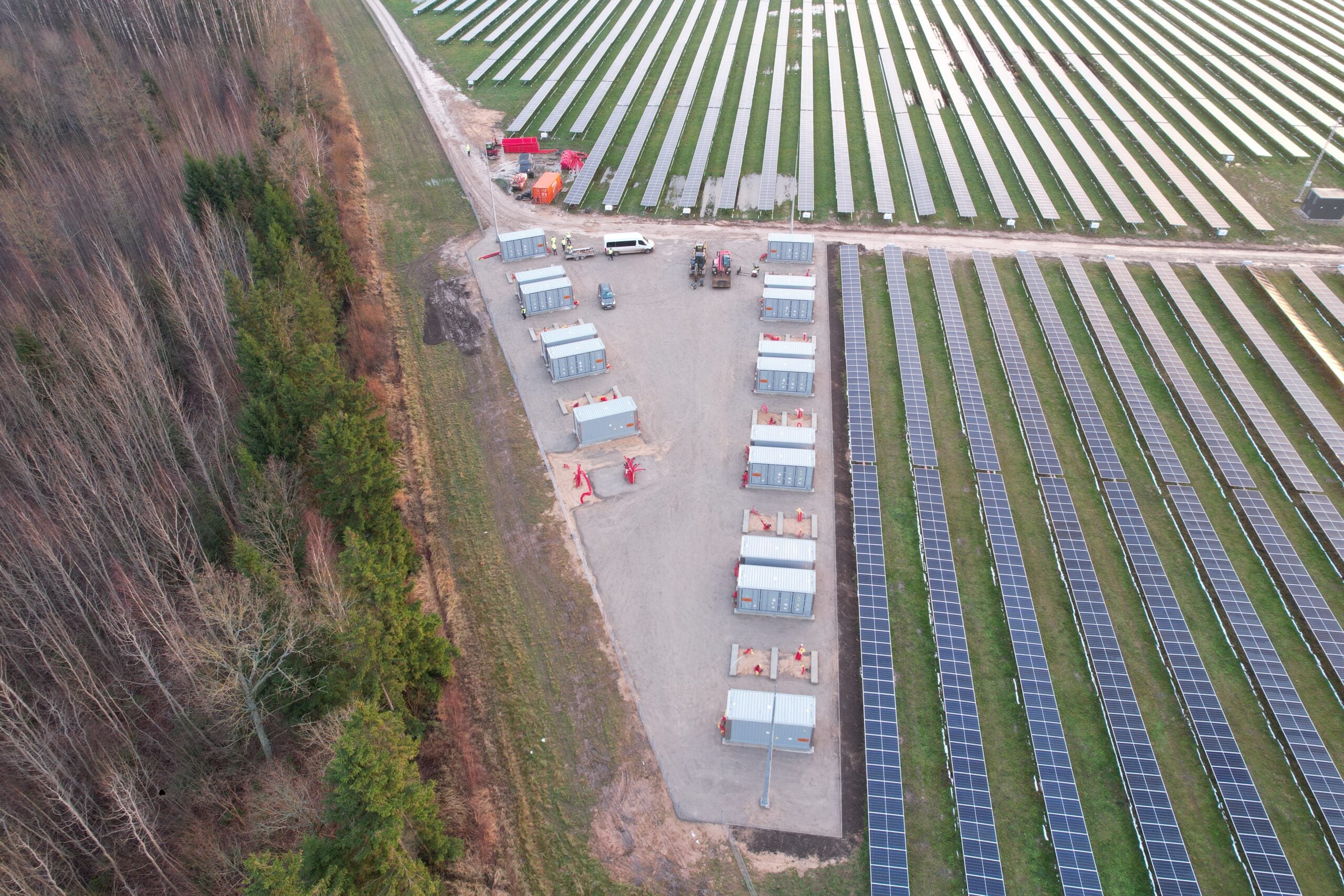
65 MWh battery system completes construction in Lithuania, as European Energy gears up for new phase of renewable energy roll-out in the Baltics.
– European Energy has completed construction of a 65 MWh battery energy storage system at its 78.5 MW Anykščiai solar park in Lithuania, with operations planned to start in February 2026.
– The battery system upgrades the site to a hybrid renewable energy park, enabling energy storage, participation in advanced balancing services and improved grid stability.
– The project forms part of European Energy’s broader renewable energy activities in Lithuania, combining project development, asset optimisation and portfolio management, including partnerships and transactions.
Copenhagen, Denmark, 29th of January, 2026 – European Energy has completed construction of its first battery energy storage system in the Baltic states. The 65 MWh battery installation has been added to the company’s 78.5 MW Anykščiai solar park in Lithuania and is scheduled to begin operation in February 2026.
The battery system will enable the storage of renewable electricity and support grid stability. By integrating energy storage with an existing solar asset, European Energy is upgrading the Anykščiai site from solely electricity generation to a hybrid renewable energy park combining solar power and battery storage. The project is expected to be among the first hybrid renewable energy parks in Lithuania.
The Anykščiai solar park is already fully operational and is among the largest solar projects in the Baltic region. It is also the first solar park in Lithuania to be connected to the electricity balancing market. Once commissioned, the battery system is expected to provide further balancing services alongside electricity generation, supporting the stability and flexibility of the electricity system.
Over the past five years, renewable energy development in Lithuania has accelerated, with a rapid increase in both solar and wind capacity. As the share of variable renewable generation grows, the need for flexibility solutions and reliable system operation has become increasingly important.
Battery energy storage systems enable electricity to be stored during periods of high production and released when demand is higher. This supports grid operation, reduces the risk of curtailment and helps moderate price volatility.
“The continued expansion of renewable energy in Lithuania means that flexibility solutions are becoming increasingly important,” says Tadeušas Konkovskis, Vice President of European Energy and Head of the Baltic region.
“Energy storage plays a key role in managing variability, supporting stable grid operation and enabling the efficient integration of renewable generation.”
The battery installation at Anykščiai complements European Energy’s broader activities in Lithuania, where the company continues to develop, optimise, and selectively divest assets as part of its long-term portfolio strategy. In addition to project development, European Energy actively evaluates partnership opportunities and transactions that support the continued build-out of renewable energy capacity in the Baltic region.
European Energy currently operates approximately 380 MW of renewable energy capacity in Lithuania and is developing a further 800 MW of projects across solar, wind and energy storage.
“Lithuania is an important market for European Energy’s renewable energy development,” says Thorvald Spanggaard, EVP and Head of Project Development at European Energy.
“Alongside new development, upgrading existing assets and managing our portfolio through partnerships and transactions are important tools for supporting the continued expansion of renewable energy in the Baltic region.”
Contact
Ming Ou Lü
PR Manager
+45 3126 9376
miol@europeanenergy.com