
Article
Why Poland’s energy transition is a matter of energy independence
Apr 15, 2026

Poland’s energy independence has become a defining issue in the country’s transition away from fossil fuels.
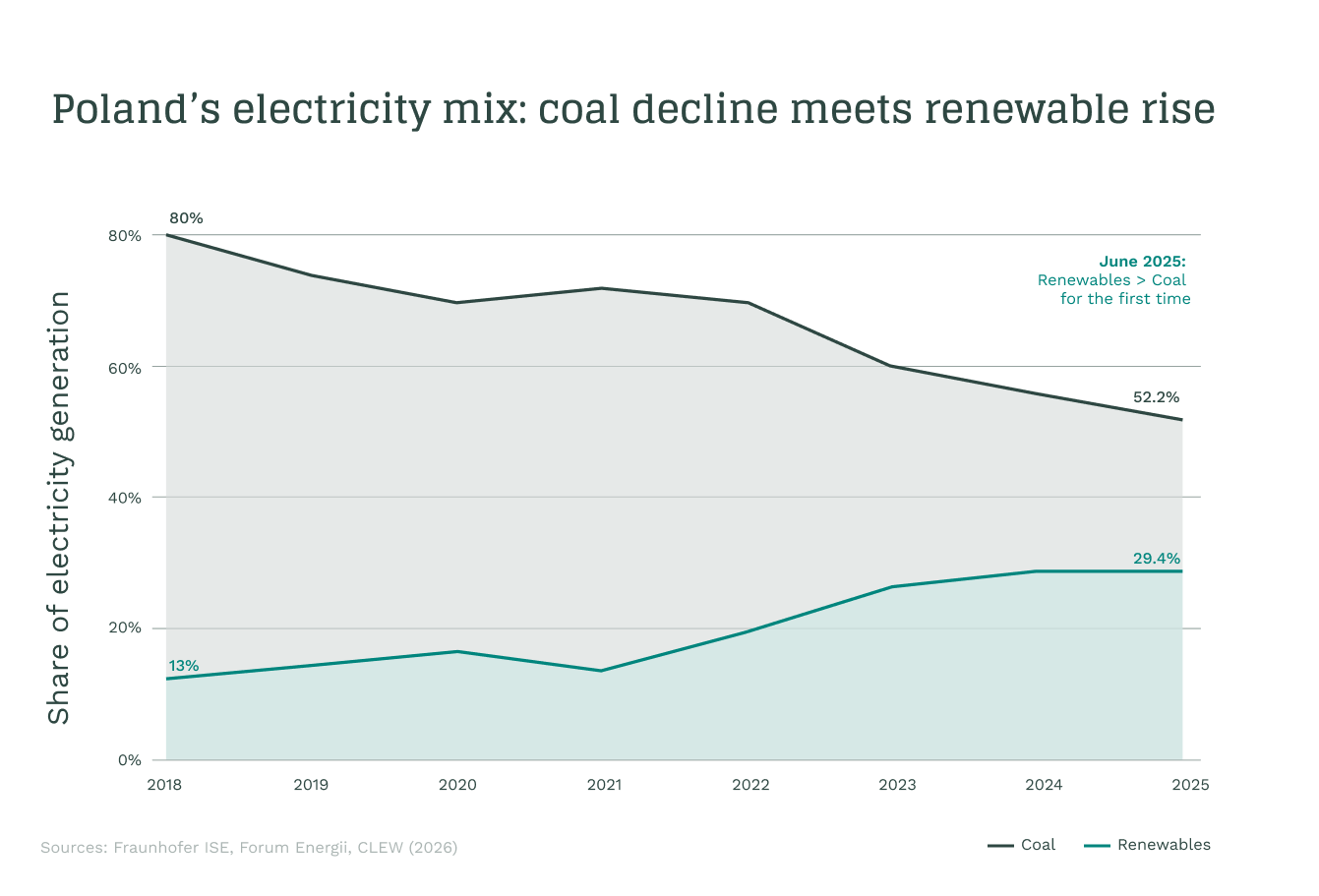
In Europe, Poland has long had a track record of using fossil fuels for energy, while most of the rest of the continent has started shifting away from them. Today, Poland remains the only EU member state generating over half of its electricity from coal. However, something is starting to change in Poland. To Olga Sypuła, Country Manager for European Energy Poland, renewable energy is now viewed more positively in the country due to global geopolitical changes. I sat down with Olga to discuss why the shift to renewables isn’t just about meeting “Green Deal” targets, it’s about ensuring that Poland’s future is no longer tied to the volatile whims of global commodity markets.
The Cost of the Status Quo
The conversation around renewables often focuses on carbon footprints, but for Poland, the most compelling argument is the balance sheet.
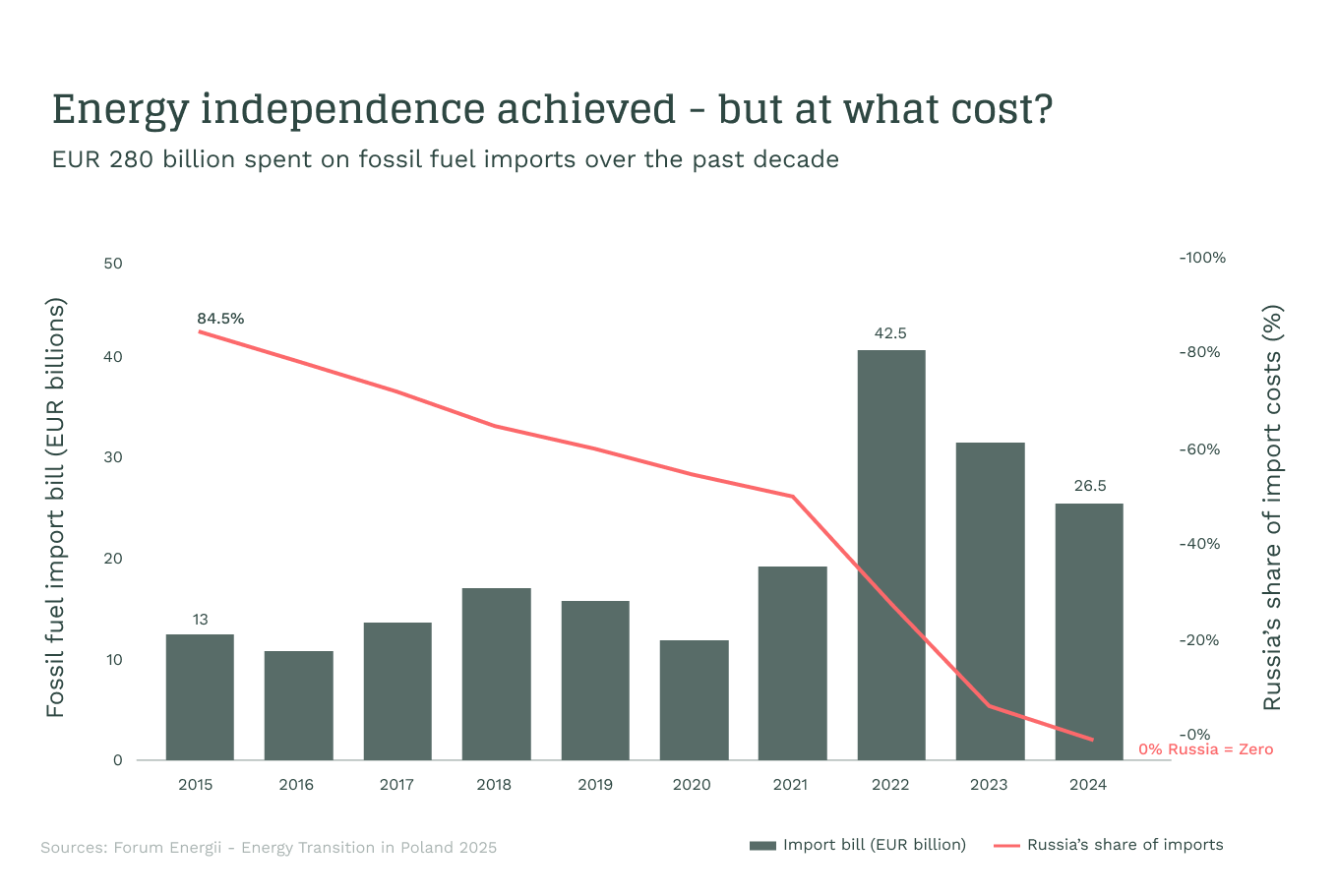
“The numbers speak for themselves,” Olga tells me. “In 2024 alone, Poland spent €26 billion on fossil fuel imports. Over the past decade, that cumulative bill exceeded €280 billion.”
This isn’t just money spent; it is capital leaving the country. By contrast, every megawatt of domestic wind or solar capacity acts as a shield against that outflow. “Energy generated from wind and solar in Poland stays in Poland,” Olga emphasises. “It does not depend on geopolitical relationships. That is what real energy independence looks like.”
The Leapfrog Effect: From Zero to 25 GW
Despite the heavy reliance on coal, Poland is currently pulling off a “technological leapfrog.” In just a few years, solar capacity has exploded from virtually nothing to nearly 25 GW.
However, speed brings its own challenges. As renewables flood the system, the grid—originally built for centralised coal plants—is feeling the strain. This is where the next phase of boosting energy independence comes into play: Storage.
“Battery Storage is what turns variable generation into reliable power,” Olga explains. European Energy recently won its first battery storage auction in Poland, a move Olga sees as critical. “Battery systems allow us to utilise our renewable energy parks more effectively. They help balance the system during peak solar hours when ‘curtailment’—wasted energy—becomes a growing challenge.”
The New Architecture: Cable Pooling & Data Centres
The future of Polish energy security isn’t just about more assets; it’s about smarter ones. Olga points to hybrid parks as the industry’s new “game changer.” By allowing wind and solar assets to share a single grid connection point, developers can maximise every inch of existing infrastructure.
“We are actively developing hybrid projects that pair solar with wind and storage,” Olga says. This creates a stable, clean baseload that better matches Poland’s next big economic driver: Data Centres.
As Poland becomes an attractive destination for global tech giants, the demand for around-the-clock clean power is skyrocketing. “Data centres need green, reliable power 24/7. Integrated renewable parks—solar, wind, and batteries—can serve those baseload needs directly.”
The Road Ahead
When I asked Olga about the critics who say the transition is moving too slowly, her response was characteristically pragmatic. The speed has been “remarkable,” but the “finish line” requires more than just hardware. It requires a regulatory environment that moves as fast as the technology.
“Grid infrastructure needs modernisation, and permitting needs streamlining,” she notes. “But the ambition is there. The developers and investors who move early will be the ones to define this market.”
For Poland, the transition is no longer a choice between “old” and “new.” It is a choice between being a consumer of foreign fuels or a producer of its own future. European Energy is betting heavily on the latter.
About the interviewee
Olga Sypula is Regional Manager for Central Europe at European Energy, including Poland, Czech Republic and Slovakia.

Explore more
Read more about our activities
European Energy in Poland
European Energy in PolandBattery storage
Battery storageHybrid parks
Hybrid parks
