
Insight
E-methanol for transport: how is e-methanol bridging the gap in transport decarbonisation?
Jun 02, 2026
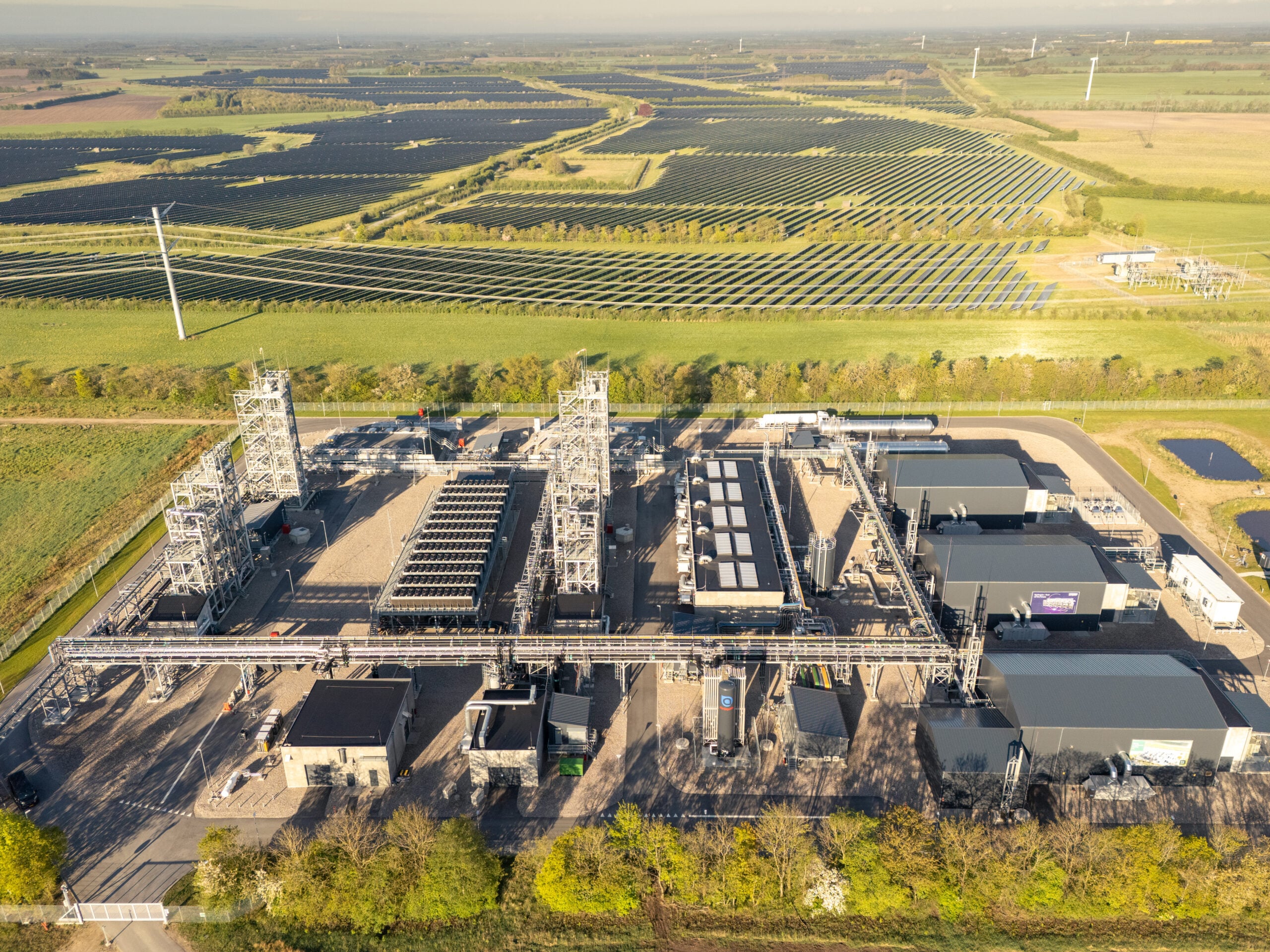
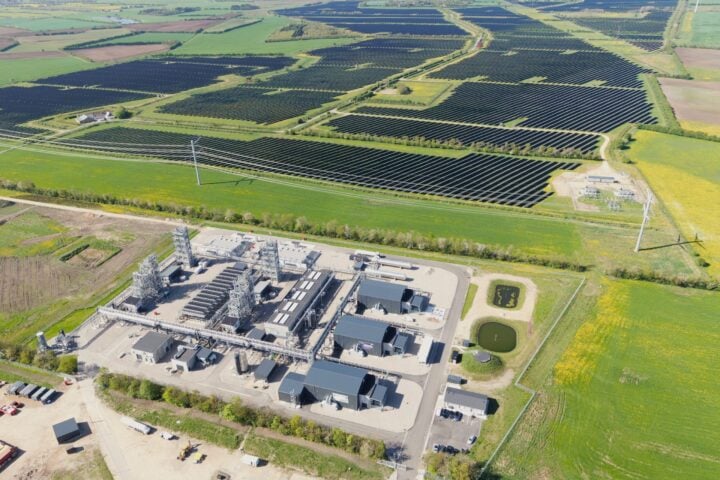
E-methanol is emerging as a key solution for decarbonising transport sectors where electrification is not feasible. As a renewable fuel classified as an RFNBO (Renewable Fuel of Non-Biological Origin), it offers a scalable pathway to reduce emissions in shipping, aviation, and transport.
At a glance
- Where: Kassø E-methanol Facility, Aabenraa, Denmark
- Output: ~42,000 tonnes of e-methanol per year
- Certification: ISCC-certified RFNBO — EU RED-compliant, full feedstock traceability
- Unique position: European Energy is currently the only company producing ISCC-certified RFNBO e-methanol at commercial scale in Europe
- Demonstrated use: 86 tonnes of Kassø e-methanol converted into RON95, RON98, and RON102 gasoline grades in Germany — no engine or infrastructure modifications required
- Regulation: Germany’s RED III transposition introduces binding RFNBO quotas
- Funding: European Energy selected for German hydrogen auction
The challenge: decarbonising transport where electrification falls short
Direct electrification is rapidly transforming passenger cars and light urban transport, with renewable sources reaching an estimated 11.3% in 2024 and further goals set for 2030 (EEA, 2025). But for a significant share of the transport sector, such as refineries, heavy-duty road freight, aviation, and shipping, direct electrification is not a near-term option.
These sectors rely on liquid fuels, existing engines, tanks, and distribution infrastructure. And they are increasingly subject to regulatory obligations that require a shift away from fossil-based fuels. Renewable fuels such as e-methanol and other RFNBO fuels offer a path forward. But for that path to be viable at scale, two things are needed: production that is commercially and technically proven, and a regulatory framework that creates predictable demand.
E-methanol processed into conventional gasoline
A recent project in Germany has demonstrated a further use-case for e-methanol: as a feedstock for conventional gasoline engines. As part of the DeCarTrans research project, 86 tonnes of e-methanol from Kassø were transported to the large-scale pilot plant in Saxony. There, using the CAC METHAFUEL® process developed by CAC Engineering GmbH and TUBAF, the methanol was converted into synthetic gasoline.
The Lother Group (NORDOEL) and the eFUEL GROUP subsequently upgraded the product into multiple gasoline grades:
- RON95 E10
- RON98 E10
- RON102
These grades are compatible with existing vehicles and distribution systems, with no modifications required to engines or transport infrastructure. The same e-methanol can also serve as an intermediate for e-SAF (Sustainable Aviation Fuel) production pathways, extending its relevance across transport segments beyond road freight.
“In addition to a 90 percent CO₂ reduction compared to conventional fuels, the increased productivity of our facility thanks to the new Danish e-methanol should also be emphasised.”Prof. Martin Gräbner, Professor of Energy Process Engineering at TUBAF
Germany: From regulatory signal to market commitment
Germany is playing an increasingly active role in building the market for renewable hydrogen and RFNBO-based fuels — both through regulation and through direct funding of production capacity.
Binding quotas under RED III
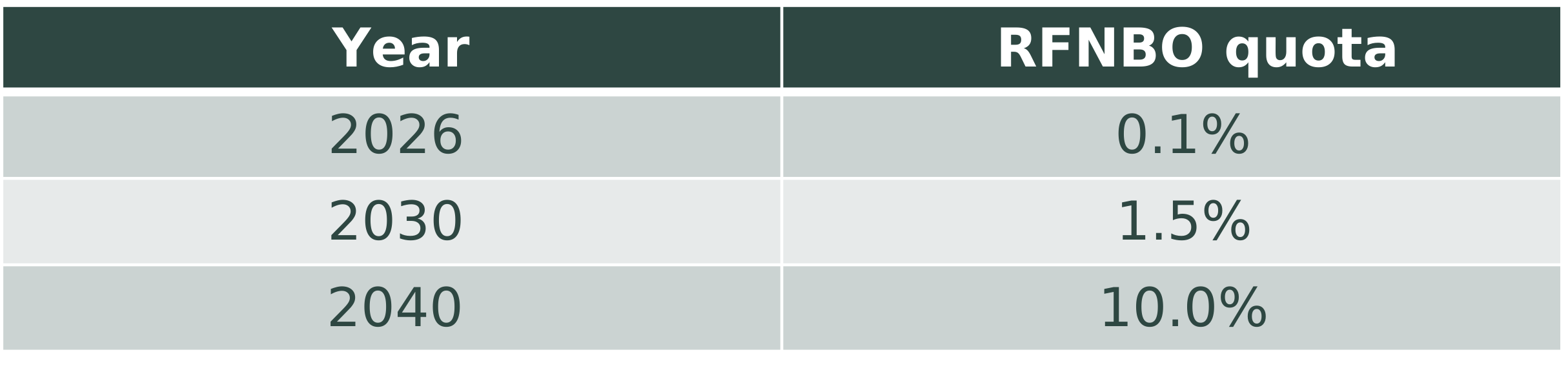
Through the transposition of the EU’s RED III Directive into German law, via the Second Act on the Further Development of the Greenhouse Gas Reduction Quota, Germany has introduced RFNBO usage requirements for the transport sector. The quotas are:
Refineries and fuel producers are now operating within a clearly defined regulatory framework that requires a measurable increase in renewable molecules in their output. For industrial buyers, this creates predictable, long-term demand and a reliable basis for offtake agreements and investment decisions.
European Hydrogen Bank award: Germany funds Danish production
Germany’s commitment extends beyond regulation. In May 2026, European Energy was selected as one of three projects to receive support under Germany’s hydrogen auction framework linked to the European Hydrogen Bank (EHB) — a European Commission mechanism designed to close cost gap between renewable hydrogen production and market demand.
The funding supports European Energy’s plans to establish additional hydrogen production capacity at the Kassø site, directly enabling the scaling of supply for Germany and broader European offtakers. The award also underlines the case for hydrogen transport infrastructure between Denmark and Germany, including a planned cross-border hydrogen pipeline. European Energy expects this project to progress as both producers on the Danish side and offtakers on the German side demonstrate market commitment.
Germany’s approach, combining binding consumption quotas with direct production support and cross-border infrastructure planning, represents a model that other European member states are watching closely. As RED III is implemented across the EU, the market mechanisms Germany is putting in place are likely to inform how other governments design their own RFNBO frameworks.
Frequently asked questions
What is e-methanol?
E-methanol is the same product as methanol (wood alcohol), which is already used as a fuel in combustion engines and as a raw material in the chemical industry. Today, more than 100 million tonnes of methanol are produced annually using natural gas and coal. E-methanol, however, is a green alternative because it is produced using renewable energy and biogenic CO₂ captured from e.g. biogas plants and waste incineration.
What is RFNBO?
RFNBO stands for Renewable Fuels of Non-Biological Origin. It is an EU classification under the Renewable Energy Directive (RED) that defines which renewable fuels — typically produced from renewable electricity and non-fossil carbon — can count towards mandatory quota obligations in transport, industry, and other sectors. RFNBO status must be verified through an approved certification scheme.
What is ISCC certification, and why does it matter?
ISCC (International Sustainability and Carbon Certification) is one of the approved certification schemes recognised under EU RED. ISCC certification confirms that a product meets the sustainability and traceability requirements needed to qualify as RFNBO-compliant. For buyers, this means the e-methanol they purchase can be counted towards their regulatory obligations and reported in sustainability disclosures with a verified chain of custody.
Can e-methanol be used in ordinary vehicles?
Yes. When processed into synthetic gasoline, as demonstrated in the German DeCarTrans project. The gasoline grades produced from Kassø e-methanol (RON95 E10, RON98 E10, RON102) are fully compatible with existing vehicles and distribution systems. No modifications to engines or infrastructure are required. E-methanol can also be used directly as a marine fuel or as a feedstock for e-SAF production.
What is the DeCarTrans project?
DeCarTrans is a German research project funded by the Federal Ministry for Transport with EUR 14.93 million. It tested the conversion of e-methanol into synthetic gasoline at industrial pilot scale. As part of the project, 86 tonnes of e-methanol from Kassø were processed at TU Bergakademie Freiberg using the CAC METHAFUEL® process, producing gasoline grades compatible with the existing vehicle fleet. The project demonstrated a CO₂ reduction of approximately 90% compared to conventional fossil fuel.
What does Germany’s RED III transposition require from fuel producers?
Germany’s Second Act on the Further Development of the Greenhouse Gas Reduction Quota introduces binding RFNBO quotas for the transport sector, rising from 0.1% in 2026 to 1.5% by 2030, reaching 10% by 2040. The legislation gives industries across the transport sector a clearly defined regulatory framework for incorporating renewable molecules into fuel production.
What is the European Hydrogen Bank?
The European Hydrogen Bank (EHB) is a European Commission mechanism that supports renewable hydrogen projects through competitive auctions, helping to bridge the cost gap between production and market demand. In May 2025, European Energy was selected as one of three projects to receive support under Germany’s hydrogen auction framework linked to the EHB. The funding will support additional hydrogen production capacity connected to the Kassø site, and strengthens the commercial case for a cross-border hydrogen pipeline between Denmark and Germany.
Why does certification matter when buying hydrogen or e-methanol?
For buyers with regulatory obligations — such as refineries subject to RFNBO quotas, or companies with verified emissions reduction commitments — only certified product can be counted towards compliance. Uncertified renewable hydrogen or methanol, regardless of how it was produced, cannot be used to demonstrate regulatory compliance. ISCC-certified RFNBO e-methanol from Kassø provides the documentation and traceability needed to satisfy auditors, regulators, and reporting frameworks.
Which sectors can use e-methanol?
E-methanol is suited to sectors where direct electrification is not immediately feasible. Current and near-term applications include:
- Shipping — as a direct marine fuel
- Fuels and refining — as a feedstock for synthetic gasoline or blending components
- Aviation — as an intermediate for e-SAF production
- Chemicals — as a building block for industrial processes
- Heavy-duty transport — via processed fuel pathways
How does European Energy plan to scale its Power-to-X activities?
European Energy operates two Power-to-X facilities in Denmark — a green hydrogen plant in Esbjerg and the Kassø e-methanol facility — and has a development portfolio spanning Europe, North America, Brazil, and Australia. The EHB award supports additional capacity at Kassø. As production volumes grow, unit costs are expected to decline across the value chain, improving the competitiveness of e-methanol relative to fossil alternatives.
Explore more
Read more about green fuels
Methanol sales
Methanol salesHydrogen sales
Hydrogen salesPower-to-X at European Energy
Power-to-X at European Energy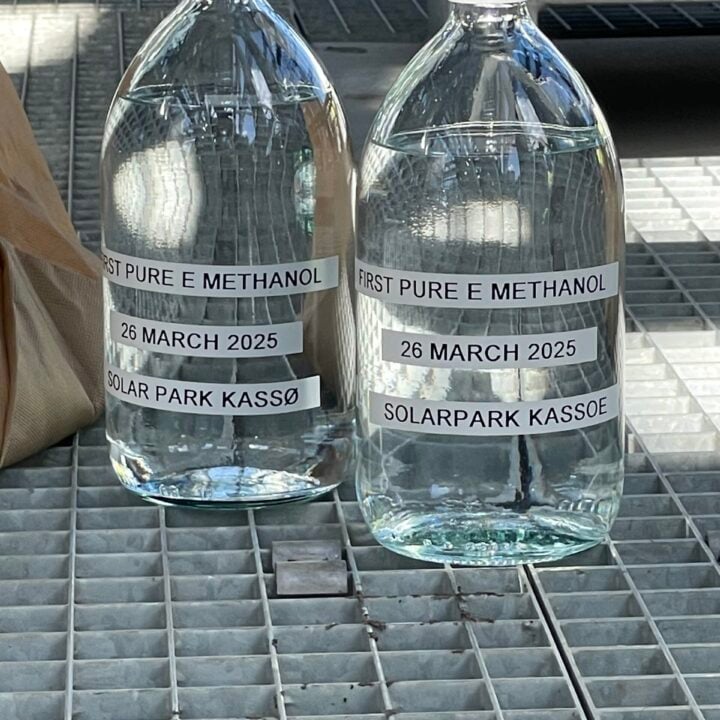

Contact us
Do you want to know more?
Reach out to our Power-to-X department to learn more about how e-methanol can decarbonise your sector.
