Hybrid energy systems: closing the coverage gap in renewables
Jun 03, 2026
Hybrid energy systems combine solar, wind and battery storage to improve the reliability of renewable energy. By integrating multiple technologies at a single site, they address intermittency and deliver more stable power output.
In a world shaped by energy volatility and increasing demand for reliable power, the energy transition is no longer only about building more capacity – it is about delivering stable and dependable energy when and where it is needed and to a decent price,
At European Energy, our response is the hybrid energy park where we combine multiple technologies at the same location.
The power of inverse correlation
Solar and wind are often grouped together as “intermittent renewables” or “non-dispatchable” energy sources, but part of their commercial value lies in their fundamental complementarity. In Northern Europe, their production profiles are naturally hedged:
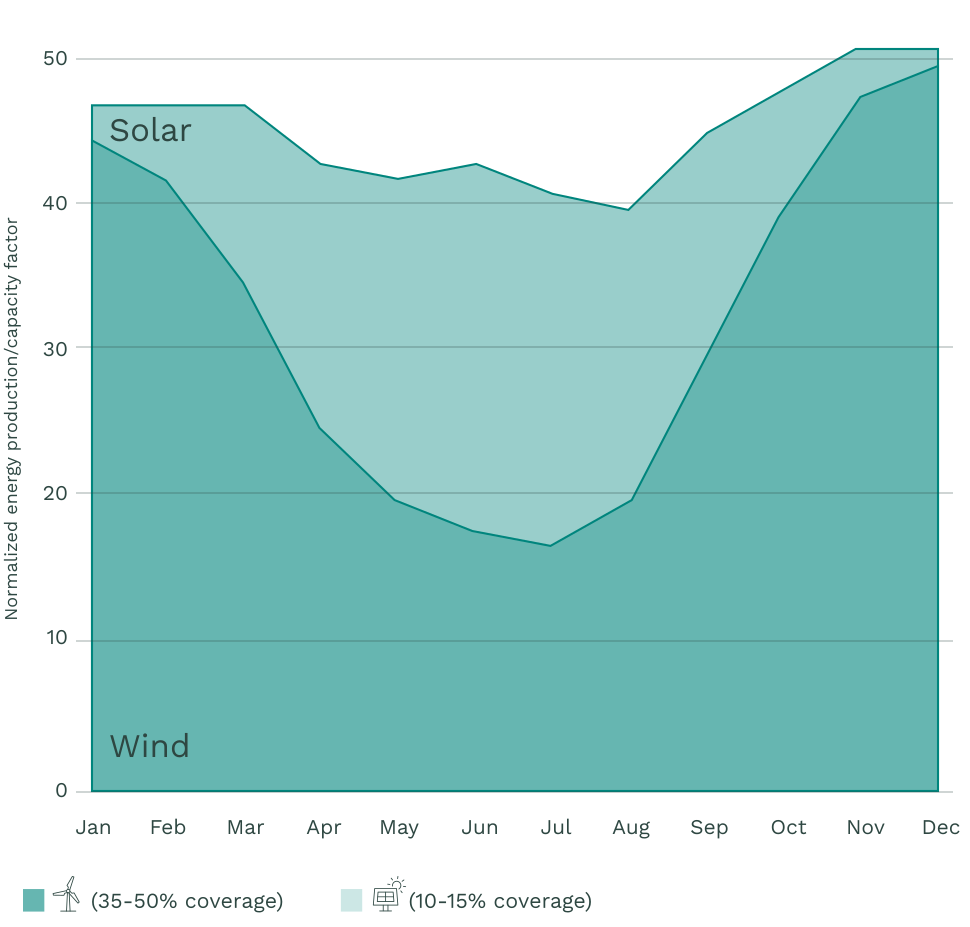
Solar PV: Our predictable midday workhorse. While it typically provides 10–15% annual coverage, its concentration during summer and spring/autumn offers a vital counterweight to seasonal wind profile.
Onshore wind: The system’s heavy lifter. With capacity factors delivering 35–50% coverage, wind performance peaks in autumn and winter—precisely when European demand is highest.
Figure 1: Monthly energy production (this picture is for illustrative purposes only)
This represents a major strategic advantage. When high-pressure weather systems stall wind production, solar provides the daytime hedge. When winter reduces irradiance, wind picks up the slack. Together, they smooth the variability that challenges standalone projects.
Solving for the “last mile”: the role of storage
Even a diversified portfolio faces the “last mile” problem: the intra-day mismatch where solar peaks at noon, but demand (and price) peaks at dusk. Without a buffer, this leads to curtailment and lost revenue.
Battery Energy Storage Systems (BESS) are the bridge. At European Energy, we view storage as a value-multiplier.
Time-shifting: moving “trapped” midday solar into high-value evening windows.
Firming: smoothing wind fluctuations to provide a more predictable export profile.
Grid efficiency: maximising the utilisation of existing grid connections.
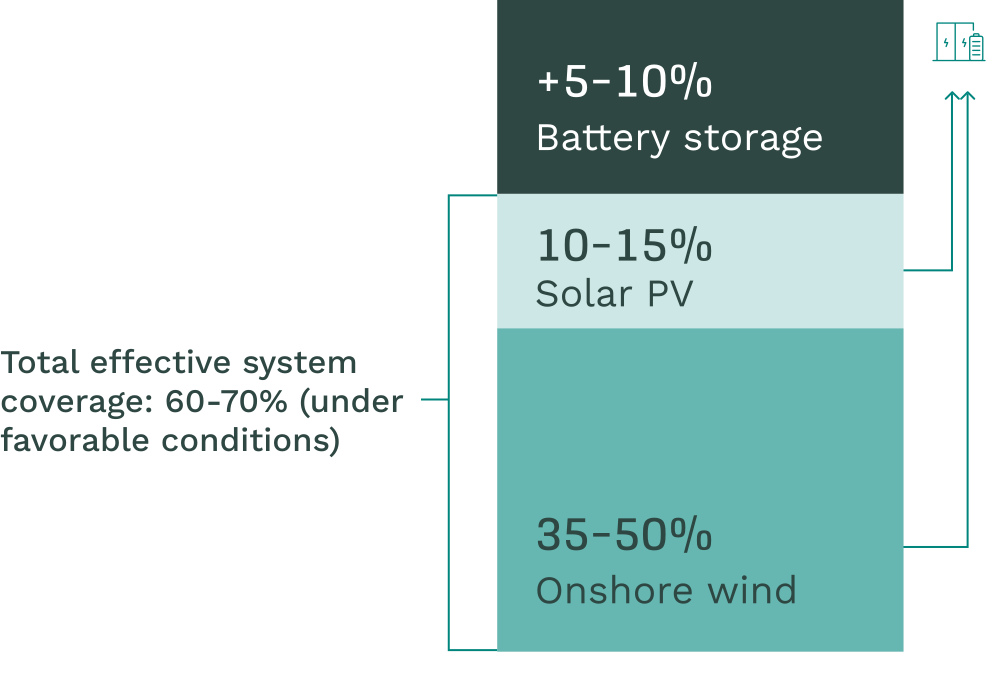
By layering BESS into the mix, we add 5–10% of effective coverage. More importantly, we transform variable generation into a dispatchable-like product.
Figure 2: Combined hybrid portfolio effective coverage(this picture is for illustrative purposes only)
The result: 70% effective coverage
When these three technologies converge, the math of the energy transition changes. We move from fragmented generation toward a system that approaches 60–70% effective coverage under favourable conditions.
This hybridisation takes renewable energy beyond producing ‘green electrons’ — but to produce usable energy. By delivering power when the grid needs it most, we reduce reliance on thermal backup and strengthen the underlying economics of every megawatt-hour produced.
Beyond the stand-alone asset
The next phase of the transition will not be defined by how much solar or wind we can build in isolation. It will be defined by how we integrate them. For European Energy, hybrid parks are the standard for the next generation of infrastructure: resilient, efficient, and commercially optimised for a zero-carbon future.
Strategic integration: from generation sites to energy hubs
Hybridisation does not end with the co-location of wind and solar. The next frontier is the integration of consumption, conversion, and flexibility behind a single point of connection. This evolution transforms a standard generation site into a sophisticated, self-optimising energy system.
The core principle is maximising the “value per connection.” Instead of treating the grid as a binary export-only sink, we utilise energy locally, convert it, or shift it to bypass congestion and capture higher market spreads.
Behind-the-meter demand — evolution of the microgrid
One of the viable extensions of hybridisation is placing high-intensity consumers — such as data centres or Power-to-X facilities — directly behind the meter. By aligning demand with onsite generation, we bypass transmission constraints and create a localised energy ecosystem.
The strategic advantages:
Grid de-risking: drastically reduces reliance on transmission availability and avoids “queue-lock.”
CAPEX optimisation: higher utilisation of expensive grid infrastructure across both generation and demand cycles.
Curtailment recovery: captures “lost” energy during peak production periods that would otherwise be throttled.
Firming via BESS: Batteries act as the stabiliser, managing sub-second fluctuations for sensitive industrial loads.
By operating as a quasi-microgrid, these sites move from being passive suppliers to active, reliable infrastructure partners for heavy industry.
Cascading efficiency for a more circular energy economy
Integrated systems enable us to use energy more than once. A prime example is the thermal byproduct of Power-to-X or Data centres. The waste heat generated is not vented; it is captured and injected into local district heating networks.
This creates a circularity that strengthens the project’s local “License to Operate” while adding a non-correlated revenue stream from heat sales. It moves the project from a simple power plant to a piece of local community infrastructure.
The energy hub: a new asset class
When we combine generation, storage, flexible demand, and conversion, the “Hybrid Park” evolves into an Energy Hub. These hubs are defined by their versatility:
Exporting power to the wholesale market.
Providing heat to the local grid.
Stabilising the national transmission system via frequency response.
The standard for future infrastructure
As grid capacity becomes the primary bottleneck for the energy transition, the most successful projects will be those that maximise the utilisation of every hectare of land and every megawatt of grid capacity. As such, we and the industry are moving beyond the era of intermittent standalone assets and into an era of fully integrated energy systems that deliver reliable, multi-sector value.
These integrated energy hubs represent the next phase of the energy transition – flexible, resilient systems designed to meet real-world demand and strengthen energy independence.