
Case
Måde energy system | Integrated wind, hydrogen and storage
Jun 30, 2026
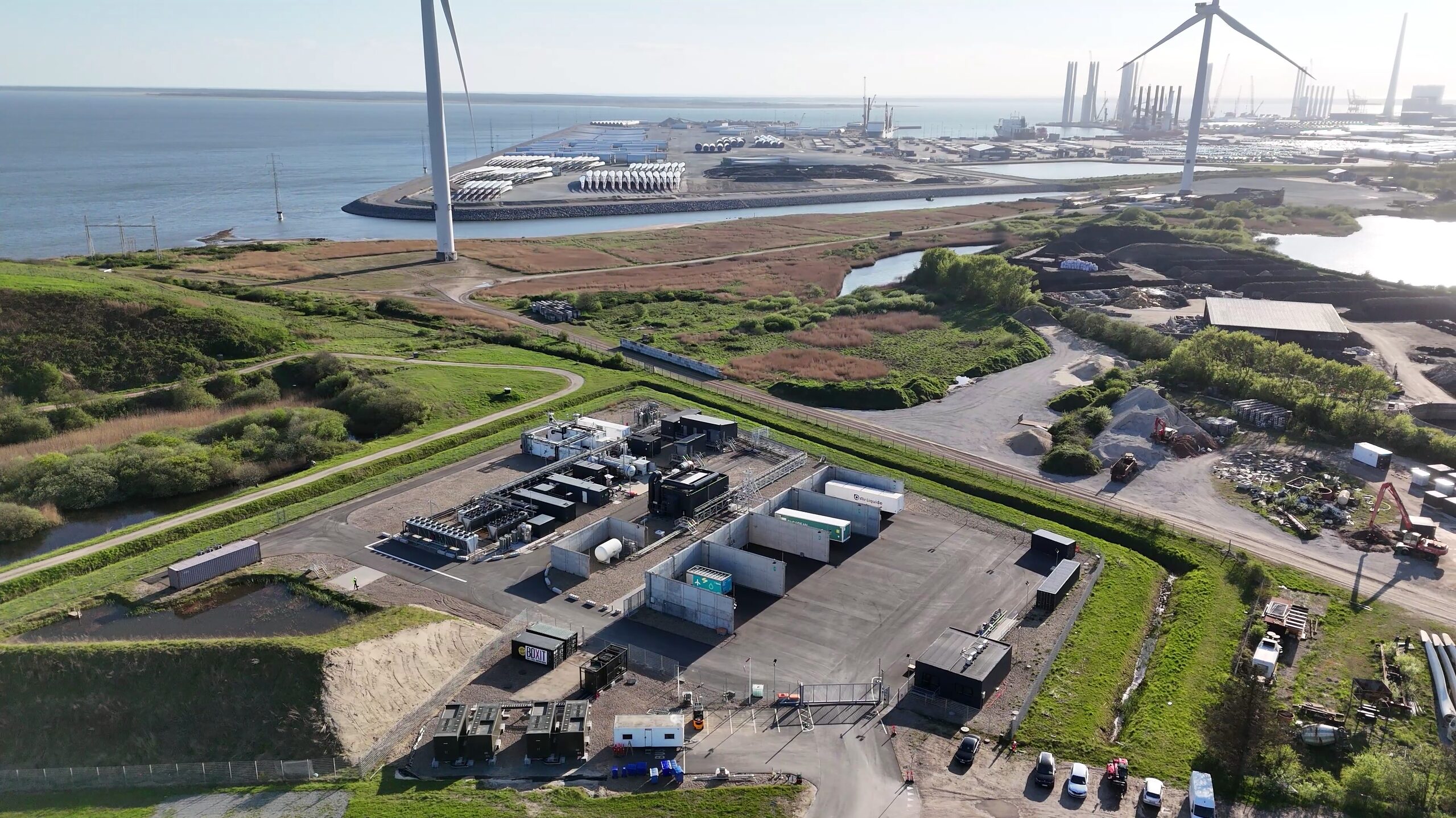
Integrated energy systems combine renewable energy generation, storage, and conversion technologies to create flexible and efficient energy solutions. At Måde, European Energy demonstrates how wind, hydrogen production, battery storage and district heating can operate as a single integrated system.
Måde is not designed as a conventional renewable energy project, it is designed as a system.
Originally established as a wind test centre, the site has evolved into one of Denmark’s most integrated hybrid renewable facilities. Today, the park combines:
- Four onshore wind turbines with a total capacity of approximately 33 MW
- Electrolysers for green hydrogen production, one 3.1 MW from Stiesdal and 5 MW from Plug Power.
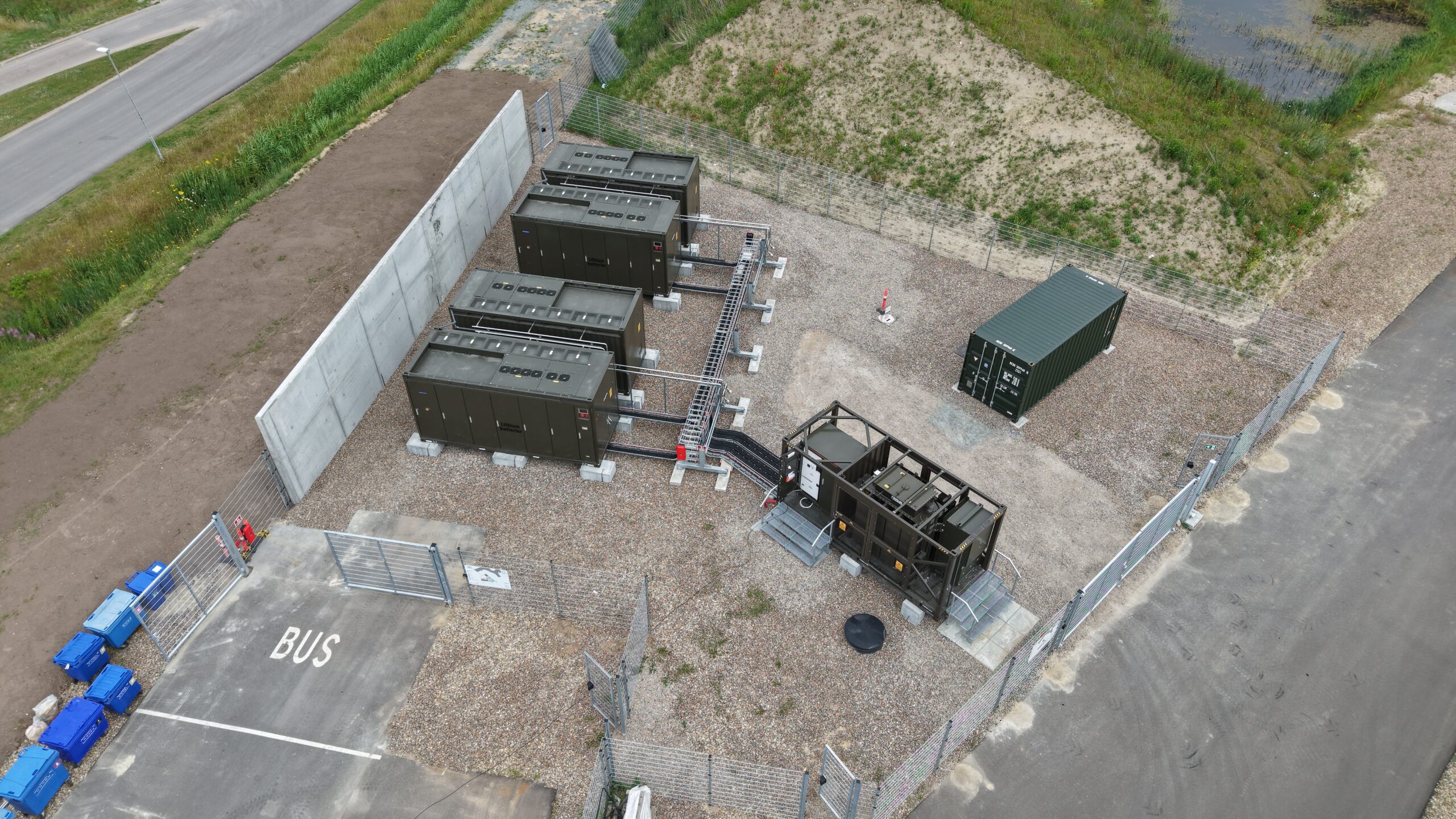
- A 5 MW, 20 MWh battery energy storage system
- Integration with the local district heating network
All assets operate through a shared grid connection and are managed together as one flexible energy ecosystem, with each technology playing its distinct role.
The wind turbines generate renewable electricity. The electrolysers convert renewable power into green hydrogen. The battery system stores electricity during periods of surplus production and releases it when demand increases or wind output declines. Meanwhile, waste heat from hydrogen production is recovered and delivered into the local district heating network, supplying heat to hundreds of nearby homes.
Individually, none of these technologies are revolutionary. What matters is the way they interact.
Solving one of renewable’s biggest challenges: flexibility
As wind production rises and falls with changing weather conditions, electricity demand fluctuates throughout the day, and grid infrastructure becomes increasingly congested, renewable power systems have long faced a persistent challenge: during periods of oversupply, large amounts of clean electricity are simply wasted.
Hybrid systems change that equation.
At Måde, surplus wind production does not automatically become curtailed energy, instead, the system can respond dynamically.
When renewable generation exceeds immediate demand, excess electricity can charge the battery or power hydrogen production. When wind output decreases, stored energy from the battery can support continued electrolyser operations or be dispatched back to the grid during higher-value periods.
The result is a much more stable and efficient operating profile.
Rather than producing electricity only when weather conditions allow, the site effectively reshapes renewable generation into a more controllable energy resource.
This has implications far beyond a single project.
The underlying logic is straightforward: electricity that cannot be used on the grid at the moment of production does not have to be wasted. With the right conversion and storage infrastructure in place, it becomes a feedstock for products the economy needs.
Interview with Twig
Q: Twig is the balancing responsible at Måde – what does that involve?
A: It means we handle the site’s energy trading and optimisation. We buy the electricity Måde needs and sell any flexible capacity, making sure the whole system runs efficiently and profitably.
Q: Måde combines wind turbines, a battery, and hydrogen production. How is balancing a site like that different from a simple solar park?
A: Måde isn’t a typical wind or solar farm – it’s an industrial site producing hydrogen as its main output. We have to prioritise running the electrolyser to meet the hydrogen schedule, then trade power around that. Plus, with on-site wind and a large battery sharing one grid connection, there are many moving parts and constraints. It’s far more complex, so having an automated system helps keep everything coordinated in real time.
Q: This project is a first-of-its-kind. What excites you about being part of it?
A: It’s hugely exciting. We’re essentially learning by doing – a pioneering site like this means every step is a chance to innovate.
Sector coupling in practice
One of the most important aspects of hybrid projects is sector coupling – the integration of electricity, heating, and fuel production into one interconnected system.
At Måde, renewable electricity is not only used for powering the grid, but also to produce hydrogen and district heating.
The hydrogen generated on site is used in sectors that are difficult to electrify directly, including heavy industry, shipping, and parts of transportation. At the same time, waste heat from electrolysis processes are captured and supplied to the district heating network rather than being lost.
This significantly improves overall system efficiency.
Heat recovery is currently implemented on the 3.1 MW electrolyser from Stiesdal, where up to 800 kW of heat can be recovered from a 3.1 MW electrical input – equivalent to roughly 25% of the supplied power.
Instead of operating isolated infrastructure systems, hybrid parks allow energy to move between sectors depending on where it creates the highest value. Electricity becomes hydrogen. Hydrogen production provides useful heat. Storage smooths fluctuations between all three.
The energy system becomes more circular, more flexible, and more resilient.
Making better use of the existing grid
Hybrid parks also address one of Europe’s growing infrastructure bottlenecks: grid capacity.
Across many markets, renewable projects increasingly face delays tied to grid connection constraints and transmission build-out timelines. Expanding grid infrastructure remains essential, but it is also slow, capital intensive, and politically complex.
Hybridisation offers another path forward.
Because generation, storage, and consumption are co-located, projects like Måde can maximise utilisation of a single grid connection point.
This creates several advantages:
- Higher utilisation of existing infrastructure
- Reduced curtailment
- Lower pressure on transmission systems
- Faster deployment opportunities for additional technologies
- Improved local balancing capabilities
In practice, hybrid parks allow more renewable energy to operate within the same physical grid constraints, which is highly valuable in an increasingly congested energy system.
A small site with large implications
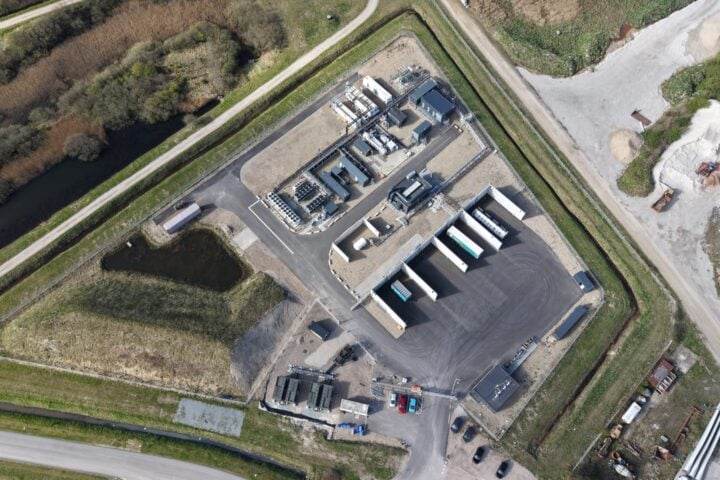
Måde is relatively modest in scale compared to utility-scale renewable developments, but it’s still important.
While the first and foremost priority is to deliver green hydrogen to commercial offtakers, the project functions as a real-world demonstration of how integrated renewable systems can operate both commercially and technically. It allows operational data, optimisation strategies, and cross-technology interactions to be tested in practice before scaling into larger deployments.
The site is also being used to trial different electrolyser technologies and operational approaches, helping generate insights that can improve future large-scale Power-to-X developments.
In that sense, Måde is less about maximising output today and more about defining how future renewable systems can work effectively and operate as fully integrated energy systems.
The broader lesson is clear: the future energy system will not be built around isolated technologies, it will be built around integration.
Explore more
More on integrated energy systems
Battery energy storage systems (BESS)
Battery energy storage systems (BESS)Power-to-X
Power-to-XHow to lighten the load on a congested grid
How to lighten the load on a congested grid
