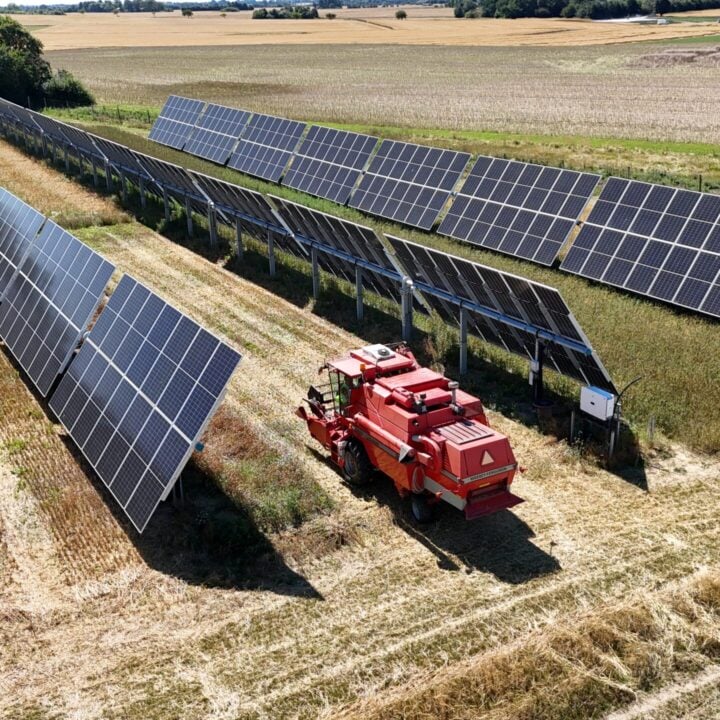
Flakkebjerg Agri‑PV is a Danish research and demonstration site where solar energy production and agriculture operate on the same land. Developed by European Energy in collaboration with Aarhus University, the University of Copenhagen, and Slagelse Municipality, the project explores how farmland can support renewable energy generation without being taken out of agricultural use. The site serves as a practical test case for agri-PV under real farming conditions in Northern Europe.
In Northern Europe, land is scarce and expected to deliver multiple public goods: food production, climate mitigation, and environmental protection. Agri-PV is often discussed based on experiences from sunnier regions, but local conditions differ significantly. Lower sun angles, variable weather, large-scale arable farming, and strict land‑use regulation all affect how agri‑PV works in practice. Research at Flakkebjerg helps clarify whether agri-PV is a realistic option for Northern European agriculture and energy systems.




In the 2025 harvest, crop performance under agri-PV differed by crop type, highlighting the importance of crop selection when designing agri-PV systems.
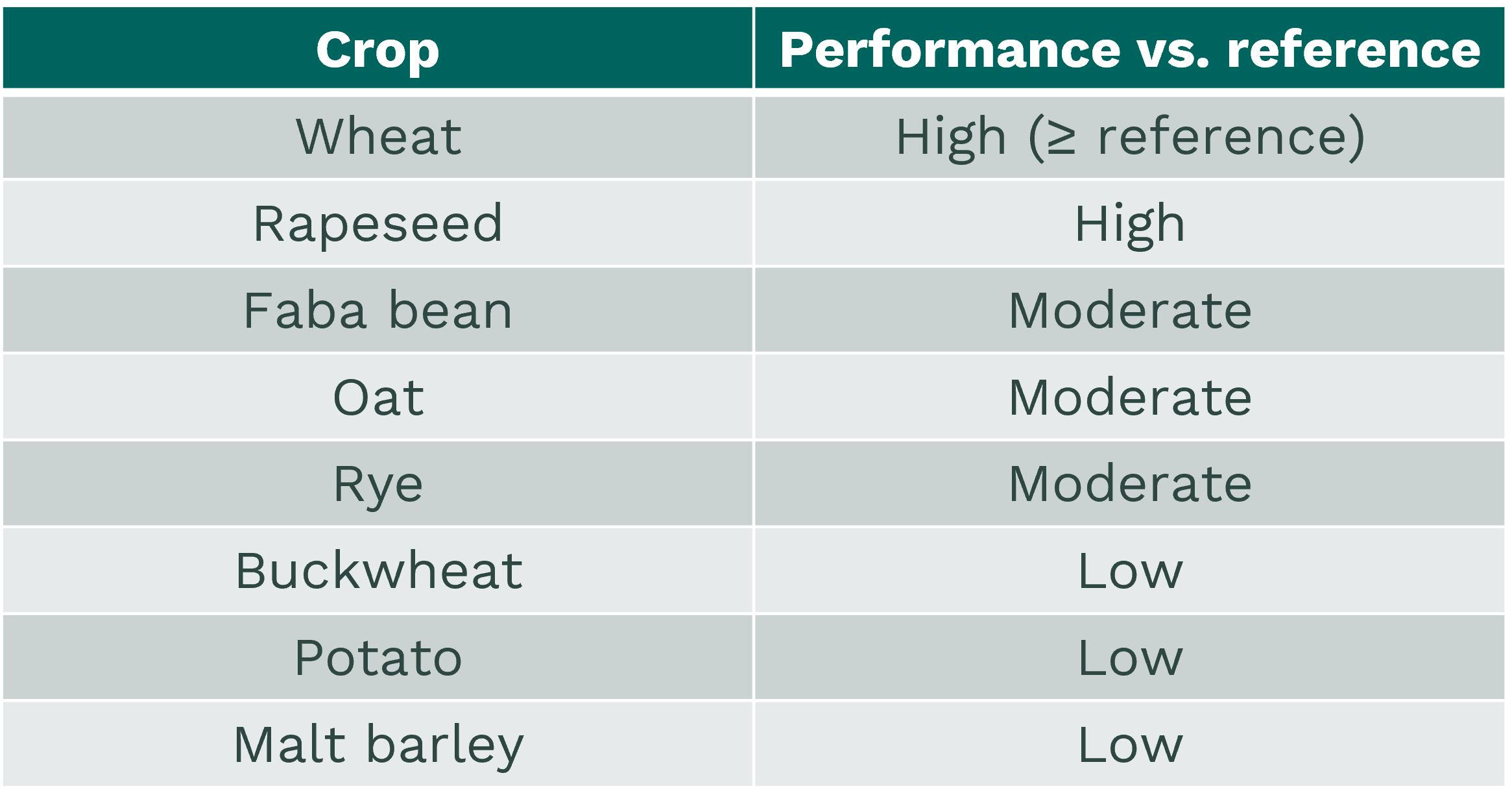
Crops such as winter wheat and rapeseed performed at or close to reference levels, demonstrating that some arable crops can maintain conventional productivity under elevated solar panels. These crops appear well suited to agri-PV conditions and point to strong compatibility between food production and energy generation on the same land (under Northern European conditions).
Across crops, field position mattered: yields were generally higher in the central alleys between panel rows than at the outer edges, underlining the role of layout and light distribution. Importantly, crop quality was less affected than yield, suggesting that agri-PV systems may preserve marketable quality even where volumes decline.
Do you want to know more?
Reach out to European Energy’s project lead at Flakkebjerg.